
What to look for in a high-quality Faraday sleeve or bag
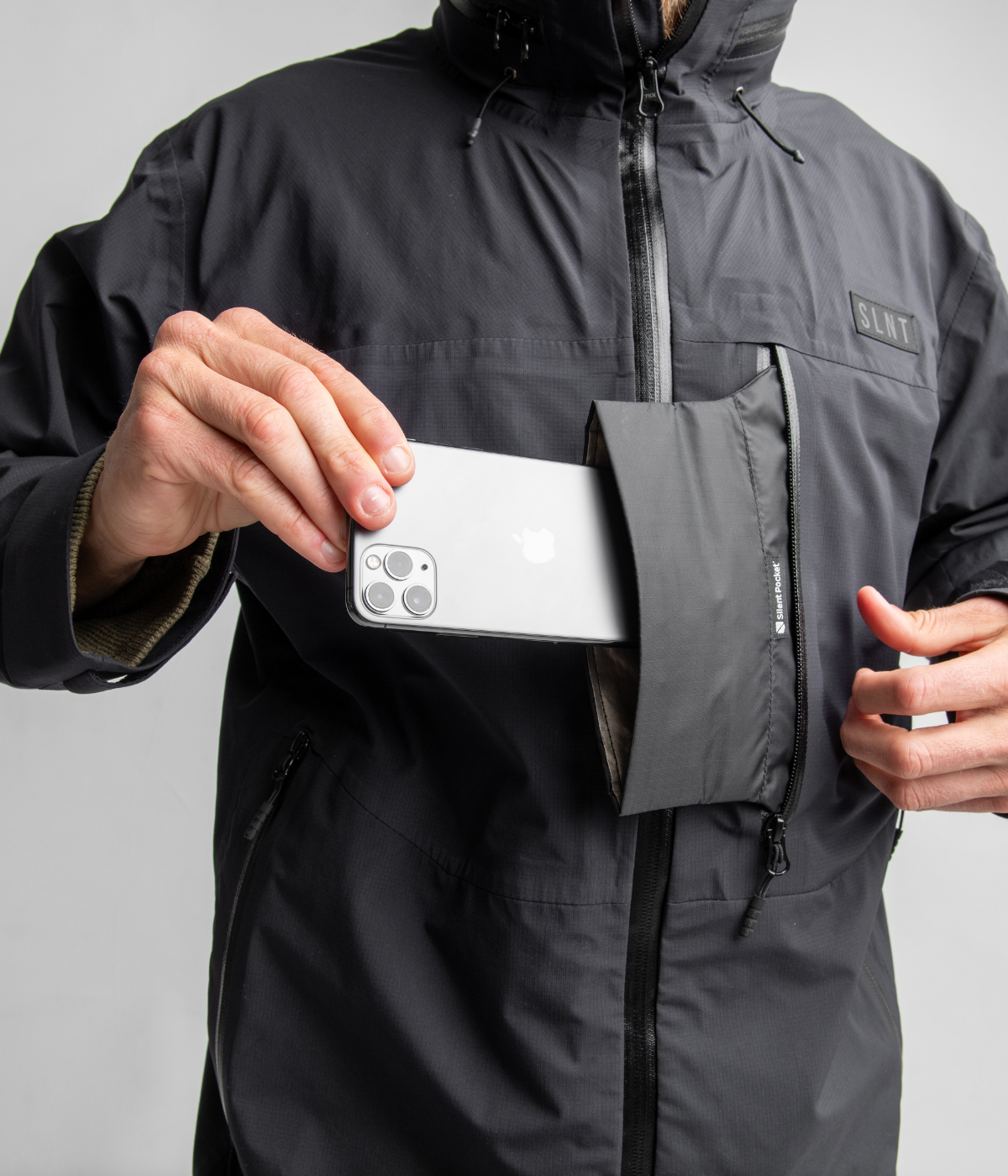

Pretending airplane mode to protect your privacy is like locking your front door and leaving the windows wide open. It looks secure. It isn’t.
Your phone is built to connect. Constantly. And every signal it sends or receives leaves a trail. Location. Identity. Behavior. That’s not drama. That’s how modern devices work.
What Separates a High-Quality Faraday Bag From the Rest
Not all Faraday gear works the same. Here’s what actually matters when comparing products.
1. Signal Coverage That Matches Your Devices
Start with your devices, not the bag. A phone uses cellular, WiFi, Bluetooth, GPS, and NFC. A keyless car fob uses radio. A laptop leans on WiFi and Bluetooth.
Then check what the Faraday bag says it blocks. The product description should list every signal your devices use:
-
Cellular
-
WiFi
-
Bluetooth
-
GPS
-
RFID / NFC
If a signal your device depends on is missing from that list, keep looking. One open channel is enough to keep a device broadcasting.
2. Consistent Shielding Construction
Shielding sits inside the bag. You can’t confirm it by looking at seams or lining, so let the product description tell you.
Check two things: which compartment is shielded, and which shielding material it uses. On a backpack, for example, the shielding may sit in one dedicated sleeve while the rest is regular storage. If the description doesn’t say which part blocks signal, ask before you buy.
High-quality Faraday sleeves and bags are engineered as enclosed systems, not just lined pockets.
3. Reliable Closure Design
Shielding only works when the closure is fully shut. Close it the way the product instructions describe, every time.
Fit is part of that. Your device should slide in and the closure should still shut without forcing it. If a thick case or a tight fit keeps the opening from closing as instructed, the shield is open.
Look for designs that keep shielding intact every time the bag is closed, not just when it’s new.
4. Independent Testing and Proven Use
Claims are easy. Performance is not.
A test report tells you what a product page can’t. When a brand publishes testing, look for four things:
-
The lab. Who ran the test, and whether they’re independent from the brand.
-
What was tested. A material sample or a finished product. A material result shows what the fabric can do. It doesn’t automatically tell you how a specific bag performs with its seams and closure.
-
The frequencies. The range that was tested, so you can see whether it covers the signals your devices use.
-
The results. How much signal was reduced at those frequencies, usually shown in decibels (dB).
Real-world use in demanding environments adds context. It doesn’t replace a published report.
Want to see one? Our third-party testing page shows the lab, the material, and the frequency ranges behind our Multishield® results.
5. Built for Real Life
A Faraday bag should fit into your routine, not disrupt it. If it’s bulky, fragile, or inconvenient, it won’t get used.
Fit comes first. Measure your device with its case on and compare it to the bag’s usable internal dimensions, not the outside measurements. Devices aren’t meant to fit edge to edge, so size up if you’re close.
Here’s how that looks. Our Medium phone sleeve lists 6.7 x 4.5 in (17 x 11.5 cm) of internal space. If your phone in its case comes close to either number, go one size up. Our size guide lists the usable internal dimensions for each size.
Then think about how you’ll carry it. A sleeve slips into a bag you already own. A backpack with a shielded compartment carries everything at once, with more weight on your shoulders. Check the listed weight and pick the format you’ll actually use every day.
Protection only works when it’s practical.
The Problem: Digital Exposure Is the Default
Most people don’t opt into tracking. It’s built in.
Phones, key fobs, tablets, and laptops broadcast cellular, WiFi, Bluetooth, GPS, RFID, and NFC signals by design. Those signals enable convenience, but they also enable tracking, skimming, credential exposure, and data harvesting.
Software controls help, but they don’t solve the core issue. Settings can be bypassed. Permissions get updated. Background processes keep running. As long as a device can transmit, data can move.
That’s the reality.
The Solution: Physical Signal Control
Ahigh-quality Faraday bag or sleeve solves the problem at the source. Not with software. Not with apps. With physics.
Faraday protection creates a physical barrier that blocks wireless signals from entering or leaving your device. No signal in. No signal out. Tracking stops because transmission stops.
This is hardware-level control. The same principle used in secure facilities and military operations, now built into everyday gear.
Important clarity: Faraday products donot stop a phone’s microphone from listening. The microphone is built into the device. What Faraday protection stops is the ability for audio, data, or location information to transmit wirelessly while the device is shielded.
How Faraday Gear Fits Into Daily Life
Faraday protection isn’t about disappearing. It’s about choosing when you’re connected.
-
During travel, a Faraday phone sleeve keeps your device from constantly pinging towers, WiFi networks, and Bluetooth beacons while moving through airports and hotels.
-
On daily commutes, shielding your phone or key fob prevents background tracking and relay attacks without changing how you move.
-
In meetings or focused work blocks, placing devices in a Faraday bag removes distractions and eliminates passive data transmission.
-
For parents, storing kids’ tablets or phones in Faraday sleeves during downtime helps enforce boundaries without arguments or settings battles.
-
For crypto users and professionals, Faraday bags protect phones, hardware wallets, and laptops from remote access and wireless exposure when not in use.
The gear doesn’t change your life. It supports how you already live, just with more control.
Why It Matters
Privacy isn’t about hiding. It’s about autonomy.
When your devices constantly transmit, you lose control over your location, habits, and attention. Over time, that data becomes permanent, portable, and valuable to people you never agreed to trust.
Physical signal control restores balance. It gives you the ability to move, work, and disconnect on your terms.
For those who are also EMF-conscious, reducing unnecessary wireless exposure while devices are stored is a secondary benefit. The primary value remains control.
SLNT Faraday gear is built with patented technology, independently tested, and rooted in real-world adoption that began in high-security environments. The same discipline now applies to everyday life.
The Bottom Line
A high-quality Faraday sleeve or bag does one thing exceptionally well: it shuts down wireless signals when you decide it’s time.
No noise. No tracking. No guesswork.
You don’t need to abandon technology to take control of it. You just need the right tool at the right moment.
Know what to check? Next, match it to how you live. Our guide to choosing the right Faraday bag for your profession or lifestyle breaks it down.
Silence the chaos.